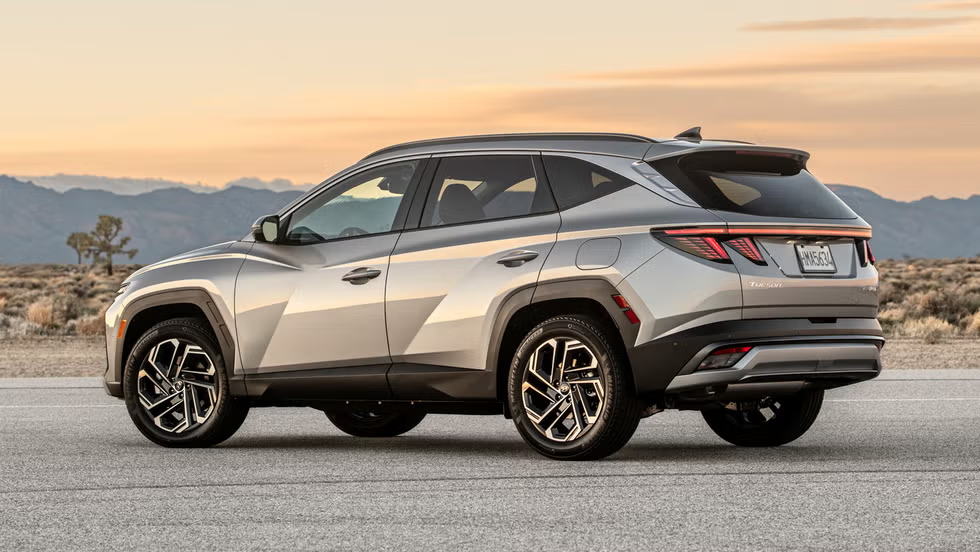
Are you looking for a stylish, powerful, and feature-packed SUV in 2025? If yes, the newly launched Hyundai Tucson 2025 might be exactly what you’re searching for.
Many buyers get confused about what’s new in the latest model, what features actually matter, and whether the price is worth it. This article will give you a clear and simple breakdown of everything that has changed in the 2025 Tucson — its advanced features, premium design upgrades, improved performance, and complete price & specs.
I’ve been following the Hyundai Tucson 2025 launch closely, and Hyundai finally revealed the refreshed model at the New York International Auto Show on March 27, 2024. The SUV is now officially on sale, and in this blog, you’ll get a quick, easy-to-understand guide to all the updates: design, interior tech, engines, safety features, and pricing.
you’ll know exactly whether the 2025 Hyundai Tucson is the right SUV for you.
What’s new on the outside and inside
The 2025 Tucson gets a sharper look Hyundai calls Parametric Dynamics. The grille and bumpers are revised, the daytime running lights are simplified to 8 light areas (down from 10), and there are new wheel designs and anodized badging. I like the practical update: a longer rear wiper for better rear visibility — small change, big payoff when it rains.
Inside, Hyundai gave the Tucson a more premium feel. Higher trims offer a panoramic, curved dashboard with twin 12.3‑inch displays (one for the gauges, one for infotainment). Many trims get a larger “hoodless” touchscreen, and Hyundai brought back physical knobs and switches for common controls — something I appreciate when driving and adjusting settings quickly.
There’s also more storage, an available column‑mounted shift selector (shift‑by‑wire) on premium models, and wireless Apple CarPlay/Android Auto with OTA updates. On tech, higher trims add a 12‑inch head‑up display, Bose audio, and features like a fingerprint start and Digital Key.
Powertrains and real-world performance
The 2025 Tucson comes in three drivetrain families: gas, hybrid, and plug‑in hybrid (PHEV). Each serves a different buyer.
- Gas (base): A 2.5‑liter inline‑4 with about 187 hp, paired to an 8‑speed automatic. This is your straightforward daily commuter engine.
- Hybrid: A 1.6‑liter turbocharged engine plus electric motor. Combined output is about 231 hp and roughly 271 lb‑ft of torque in some reports. The hybrid uses a 6‑speed automatic and comes standard with AWD on hybrid trims. EPA combined can reach around 35 mpg on hybrid Limited trims.
- PHEV: A plug‑in hybrid with roughly 261–268 hp depending on spec, and about 32–33 miles of EV range. In hybrid mode it achieves roughly 35 mpg combined. Level‑2 charging can refill the battery in about 2 hours.
For hauling, expect about a 2,000 lb towing capacity on properly equipped models. Interior space is good: rear legroom is about 39.5 inches, cargo is around 38.7 cu ft with seats up and expands to about 74–74.8 cu ft with seats folded on non‑PHEV models. PHEV cargo is smaller (around 31.9 cu ft) due to battery packaging.
Safety and driver‑assistance — what I’d count on
Hyundai keeps adding smart safety tech. The Tucson now offers a camera‑based Forward Attention Warning to watch driver focus. Adaptive cruise with stop‑and‑go is standard on base trims. On higher trims you can get Surround View Monitor, Blind‑Spot View Monitor, Highway Driving Assist (hands‑free on Limited), reverse parking collision avoidance, Rear Occupant Alert, and the rest of Hyundai SmartSense.
These systems help reduce stress in traffic and highway driving. In independent reviews, rating results from IIHS and NHTSA were highlighted — Hyundai improved active safety features and standard connectivity across trims.
Trim lineup and pricing at a glance
The Tucson comes in several trims: SE (base), SEL (mid), XRT (outdoors‑oriented), N Line (sportier), and Limited (top). Hybrid and PHEV options are available across specific trims; AWD is standard on many hybrid/PHEV variants.
Here’s a quick table comparing the three main powertrains and sample starting MSRPs reported by major outlets. These are U.S. guide numbers — dealer pricing and incentives will change final cost. All prices exclude destination and options.
| Powertrain | Power / Torque | Fuel / EV Range | Cargo (cu ft) | Example Starting MSRP |
|---|---|---|---|---|
| Gas 2.5L | ~187 hp | Regular gas, 8‑speed auto | ~38.7 (seats up) | ~$30,200 (SE) |
| Hybrid 1.6T | ~231 hp / ~271 lb‑ft | ~35 mpg combined (Limited), AWD | ~38.7 / ~74 folded | Mid‑$30k to low‑$40k |
| PHEV | ~261–268 hp | ~32–33 mi EV range; ~35 mpg hybrid mode | ~31.9 (smaller cargo) | ~$41,225 (SEL PHEV) to ~$48,935 (Limited) |
Ownership value, warranty and real examples
Hyundai brings strong ownership perks. The basic warranty is 5 years / 60,000 miles and the powertrain/battery coverage often extends to 10 years / 100,000 miles on many hybrid/PHEV parts. Hyundai also includes complimentary Bluelink services and limited maintenance/roadside packages depending on trim and market.
To give a real example: I checked reported arrival times — the 2.5L gas models hit U.S. dealers in June 2024 and the 1.6L turbo hybrid and PHEV arrived later that summer. If you saw a Hybrid Limited model in reviews, it often scored around 35 mpg combined in EPA estimates and offered the added AWD traction and stronger combined power compared with the base gas engine.
How the Tucson stacks up and who it’s for
If you want a comfortable daily driver with solid tech and multiple powertrain choices, the 2025 Tucson is worth a look. The PHEV competes with RAV4 Prime and Sportage PHEV by offering a real EV range (low‑30 miles) and strong horsepower. The hybrid gives you better fuel economy and standard AWD on hybrids, while the gas 2.5L keeps the entry price competitive near the low $30k range.
The N Line gives sportier styling and the XRT adds outdoorsy touches, so you can pick a Tucson that matches how you use the car.
Final Thoughts
Overall, the Hyundai Tucson 2025 refresh sharpens design, adds meaningful interior and tech upgrades, and expands powertrain choices with competitive hybrid and PHEV systems. You get stronger combined power in the electrified models, useful EV range in the PHEV, and modern safety and convenience features across trims. With starting prices near $30k for gas models and PHEV options starting in the low‑$40k range, the Tucson remains a strong value in the compact‑SUV segment.
If you want, I can provide a trim‑by‑trim MSRP table, compare the Tucson directly against a RAV4/CR‑V/Sportage, or search dealer inventory and incentives near your ZIP code. Which follow‑up would you like?