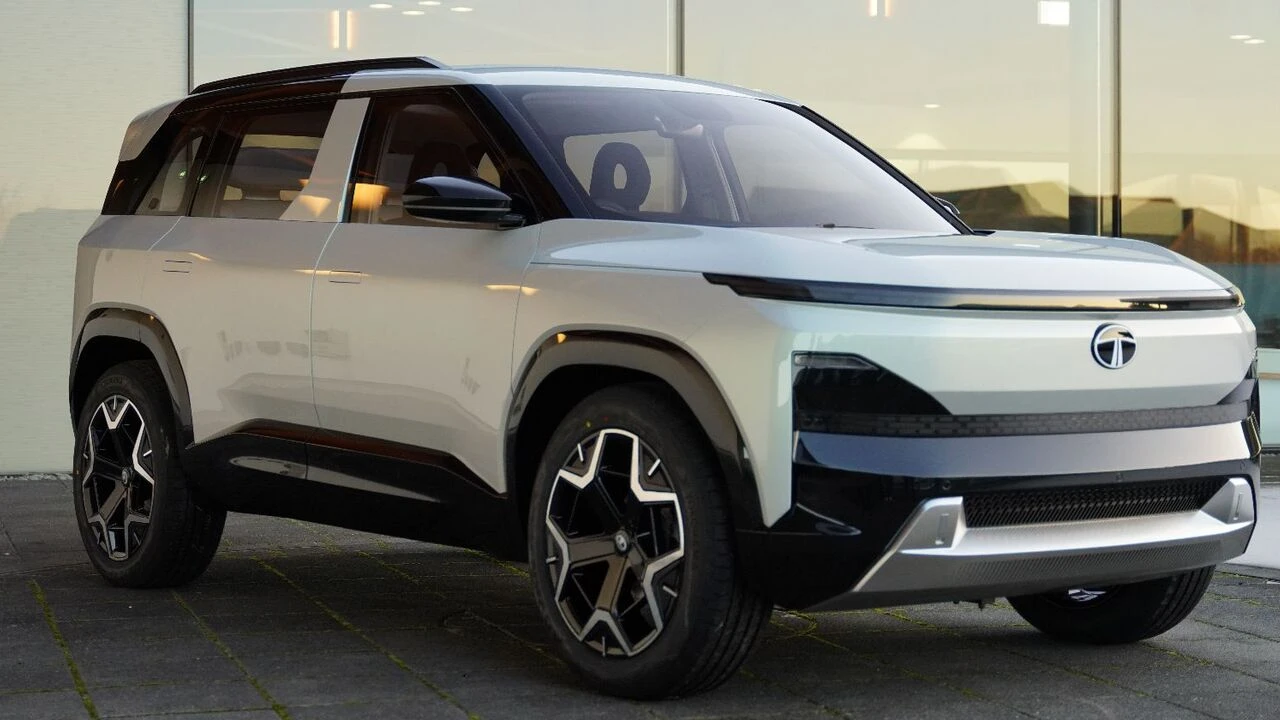
I’ve been watching Tata’s comeback with real interest, and the Tata Sierra EV 2026 is one of the most exciting models on the list. It brings a classic, boxy look back to life while promising long single-charge range for city families. If you care about roominess, tech, and electric range for everyday use, this one deserves a close look.
Design: Neo-retro styling that works for families
When Tata revived the Sierra name, they kept the upright, boxy silhouette that made the original memorable. I like how the designers mixed old-school cues with new details. The Sierra keeps a tall roof, large quarter glass, and a rugged stance — but adds split LED lights, a full-width DRL bar, flush door handles, and chunky cladding for a modern touch.
For a family SUV, that shape is practical. The tall cabin gives good headroom, the squared rear glass helps visibility, and the strong shoulder line makes it look substantial on the road. In short, the Sierra’s neo-retro look is both a style statement and a functional family shape.
Platform, battery and range: What to expect
The Sierra EV will use Tata’s next-generation EV architecture (an evolution of Acti.EV / Gen-2 Acti). Reports and insider estimates point to multiple battery options, with targeted ranges in the 450–550+ km band per charge. That range bracket is industry chatter now, and we’ll need certified ARAI or WLTP numbers to be sure.
Powertrain choices seem likely to include a single-motor setup for most buyers and a dual-motor AWD option for top-end buyers wanting higher performance and range. I think this makes sense: families often want a single motor for efficiency and cost, while a dual-motor model would give more flexibility for highway driving or rougher terrain.
Here are some concrete timing and range points to keep in mind:
- Reveal and production: Tata showed a production-ready Sierra around November 25, 2025.
- EV launch window: The Sierra EV is planned for the 2025–2026 timeframe, often described as FY2026 / early 2026.
- Expected range: Industry estimates place the Sierra EV around 450–550+ km on a single charge (pending official certification).
Interior, tech and safety: Family-friendly features
One of the Sierra’s headline features is its tech-rich cabin. Tata has talked up a “triple-screen” panoramic dash concept — a driver display, a large central touchscreen, and a passenger display that appear under one glass surface. I find that idea appealing for families: the central screen can handle navigation and media, while the passenger display might keep kids occupied or let a co-driver control infotainment.
Tata also plans strong connectivity and an ADAS suite. Expect features like adaptive cruise, lane-keep assist, and automated emergency braking on higher trims. Soft-touch materials and comfortable seating aim to lift the feel above entry-level models — useful when you spend time in the car with kids, groceries, or luggage.
Pricing, variants and how the Sierra fits Tata’s line-up
Analysts place the Sierra EV between Tata’s smaller Nexon/Curvv EVs and the flagship Harrier EV. Unofficial price chatter puts EV variants roughly in the ₹25–35 lakh bracket in India, though Tata’s final pricing may differ at launch.
That price band targets families who want a roomy, techy EV without stepping up to the largest, most expensive class. Tata also seems open to building a Sierra family with multiple body styles or trims if demand is strong — so the platform could spawn different versions later on.
Quick spec comparison: Sierra EV vs. closest Tata rivals
To give you a simple picture, here’s how the expected Sierra EV range and price line up against Tata’s Nexon EV, Curvv, and the Harrier EV (note: Sierra numbers are estimates pending official specs):
| Model | Expected Range (km) | Estimated Price (INR) | Target Buyer |
|---|---|---|---|
| Tata Sierra EV 2026 | 450–550+ (est.) | ₹25–35 lakh (est.) | Urban families, tech-focused buyers |
| Tata Nexon EV | 320–450 (depending on variant) | ₹14–20 lakh (approx.) | Small families, city commuters |
| Tata Curvv EV | 350–450 (est. variants) | ₹15–25 lakh (est.) | Style-conscious buyers, compact SUV shoppers |
| Tata Harrier EV | 500+ (top-end est.) | Above ₹35 lakh (est.) | Premium SUV buyers |
Market role and competitors: Who the Sierra will fight
In my view, the Sierra is Tata’s bid to strengthen its mid-size SUV line-up and take the fight to Hyundai, Kia, and Mahindra. The Sierra’s main rivals will be models like the Hyundai Creta and Kia Seltos on the ICE side, and as EV adoption grows, it will face more electric compact-to-mid SUVs from competitors.
A key advantage for Tata could be platform flexibility and a stacked feature list at competitive prices. If the Sierra delivers the promised range and a strong tech package, it will be attractive to families who want a long-range EV without jumping to a large premium SUV.
What to watch next: Confirmations I want to see
There are still a few important specs to watch for before we can fully judge the Sierra EV:
- Official battery capacities (kWh) and certified range (ARAI/WLTP).
- Motor power figures and acceleration (0–100 km/h times).
- Final variant list and which trims get AWD / dual-motor setups.
- Exact launch dates, booking details, and confirmed pricing.
I’ll be following Tata’s official launch materials closely. If you want, I can pull the latest Tata Motors press release and list official EV specs as soon as they are published.
Final Thoughts
The Tata Sierra EV 2026 looks like a smart mix of retro style, modern tech, and long-range EV promise. For urban families, the tall cabin, roomy interior, and targeted 450–550+ km range make it a compelling option. Tata’s planned feature set — the triple-screen dash, ADAS, and connected tech — could push it ahead of many rivals if the final price lands in the expected ₹25–35 lakh band.
There are still questions to answer, like exact battery sizes and certified range, but the Sierra’s positioning and design make it one of the EVs I’m most curious to test. If you want me to track official specs or make a one-line comparison with the Nexon EV, Curvv, and Harrier EV, tell me which option you prefer and I’ll get it done.